Orthopedic Surgical Implants: A Comprehensive Guide
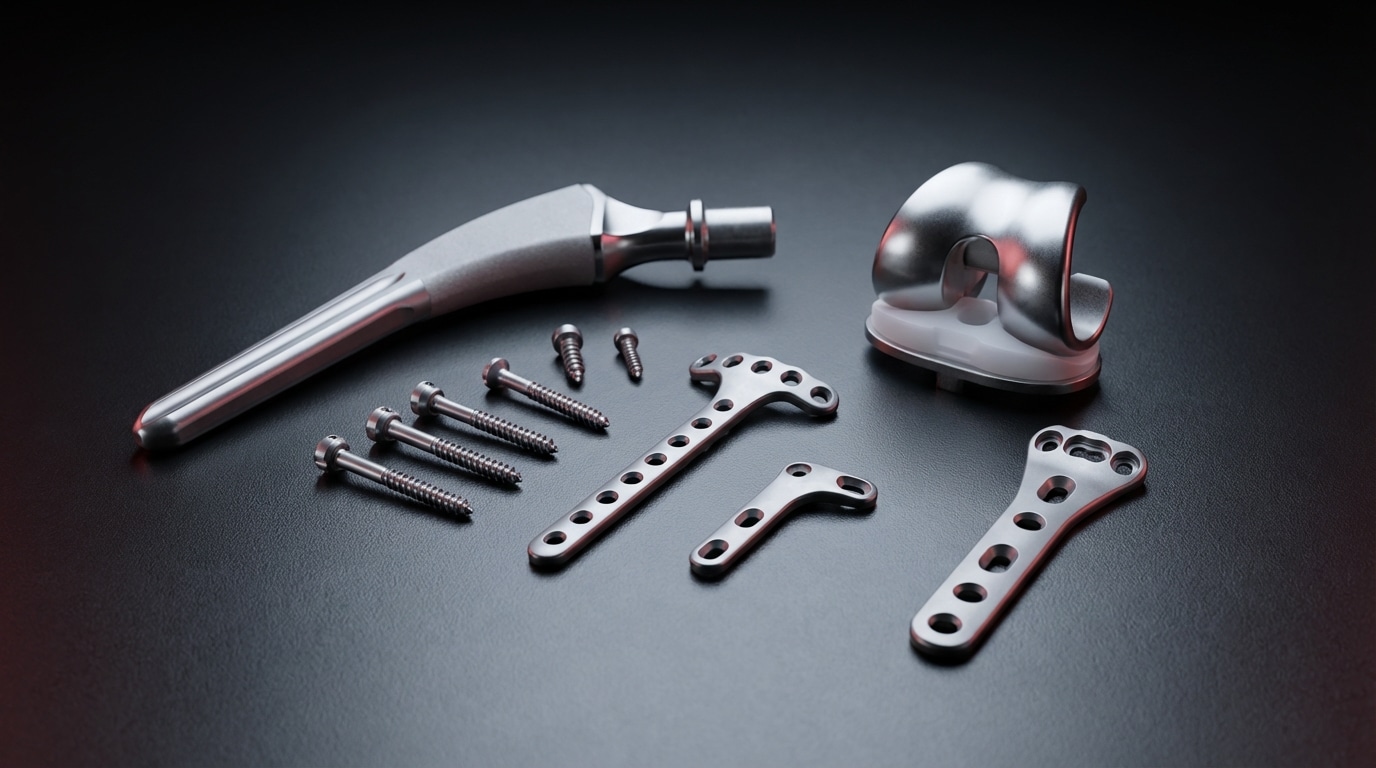
Orthopedic surgical implants are medical devices designed to replace, support, or stabilize damaged bones and joints. They include screws, plates, rods, nails, wires, and full joint replacement components. Every year, millions of these devices are implanted in operating rooms across the United States. And behind every successful outcome is a chain of decisions—from material selection and manufacturing tolerances to supplier reliability and case-day logistics—that most patients never see.
This guide is written for the people who make those decisions: surgeons choosing implant systems, procurement teams evaluating suppliers, and device representatives who stand between the two. If you work in orthopedic surgery, this is the reference you keep coming back to.
Types of Orthopedic Implants
Orthopedic implants fall into two broad categories: those that fix broken bones (trauma fixation) and those that replace worn-out joints (arthroplasty). Within those categories, the variety is enormous. A single manufacturer might offer 15,000 SKUs across their orthopedic portfolio.
Here is how the major implant types break down:
| Implant Category | Common Types | Typical Applications | Permanence |
|---|---|---|---|
| Screws | Cortical, cancellous, cannulated, locking, interference | Fracture fixation, ligament reconstruction, fusion | Permanent or removable |
| Plates | Dynamic compression, locking, reconstruction, buttress | Long bone fractures, periarticular fractures, osteotomies | Permanent or removable |
| Intramedullary Nails/Rods | Antegrade, retrograde, flexible | Femoral, tibial, humeral shaft fractures | Usually permanent |
| Joint Replacement Components | Femoral stems, acetabular cups, tibial trays, polyethylene inserts | Hip, knee, shoulder, ankle arthroplasty | Permanent (15-25+ year lifespan) |
| External Fixation | Unilateral frames, ring fixators, hybrid systems | Open fractures, limb lengthening, deformity correction | Temporary |
| Wires and Cables | K-wires, cerclage wires, tension band constructs | Fracture stabilization, fragment fixation, periprosthetic fractures | Variable |
| Spine Implants | Pedicle screws, interbody cages, rods, hooks | Spinal fusion, deformity correction, stabilization | Permanent |
| Sports Medicine | Suture anchors, interference screws, ACL fixation devices | Ligament reconstruction, rotator cuff repair, labral repair | Permanent (often bioabsorbable) |
Each category contains dozens of subtypes, and each subtype has specific design features that matter in the OR. A locking screw behaves differently from a non-locking screw. A cemented femoral stem has different fixation principles than an uncemented press-fit design. The details matter because they directly affect patient outcomes.
For a deeper look at trauma fixation hardware specifically, see our guide to types of orthopedic screws and plates used in surgery.
Implant Materials: What Goes Into the Body
Material science is the backbone of implant engineering. The material determines how long an implant lasts, how the body responds to it, how it performs under load, and whether it shows up on imaging. No single material is perfect for every application. Each one trades off in different ways.
Metals
Titanium and titanium alloys (Ti-6Al-4V) are the most widely used metals in orthopedic surgery. Titanium is biocompatible, corrosion-resistant, and has a modulus of elasticity closer to bone than stainless steel. That matters because the closer an implant matches the stiffness of bone, the less stress shielding occurs. Stress shielding causes the bone around the implant to weaken over time—a real clinical problem in long-term fixation.
Titanium also osseointegrates. The bone grows directly into the porous surface of uncemented implants, creating biological fixation without cement. This is why most modern cementless hip stems, acetabular cups, and pedicle screws are titanium-based.
Cobalt-chromium alloys (CoCr) are harder and more wear-resistant than titanium. They are the go-to material for bearing surfaces—the parts of joint replacements that articulate against each other under high load. Femoral heads and femoral knee components are almost always cobalt-chrome. The trade-off: CoCr is stiffer than titanium, which means more stress shielding in some applications. It also raises concerns about metal ion release in metal-on-metal articulations, a design concept that fell out of favor after the recall of several hip implant systems in the early 2010s.
Stainless steel (316L) is still used in some trauma fixation devices—plates, screws, and intramedullary nails—where cost matters and the implant may be removed after healing. It is strong and inexpensive. But it corrodes more readily than titanium or cobalt-chrome, and it is heavier. Most premium implant systems have moved away from stainless steel for permanent applications.
Polymers
Ultra-high-molecular-weight polyethylene (UHMWPE) is the standard bearing surface liner in hip and knee replacements. It articulates against a metal or ceramic counterpart. Cross-linked polyethylene, developed in the late 1990s, dramatically reduced wear rates and extended implant longevity. Highly cross-linked poly is now standard in virtually every total joint system.
PEEK (polyetheretherketone) is used extensively in spine surgery for interbody fusion cages. Its main advantage is radiolucency—it does not interfere with imaging, so surgeons can see whether fusion is occurring through the cage on X-rays and CT scans. PEEK is also biocompatible and has a modulus of elasticity similar to cortical bone. The downside: PEEK does not osseointegrate as readily as titanium, which has led manufacturers to develop titanium-coated PEEK cages and porous surface treatments.
Ceramics
Alumina and zirconia-toughened alumina (ZTA) ceramics are used as bearing surfaces in hip replacement. Ceramic-on-ceramic and ceramic-on-polyethylene bearings produce the lowest volumetric wear rates of any articulation currently available. They are biologically inert and do not release metal ions. The risk: ceramics can fracture under extreme load, though modern fourth-generation ceramics have made this exceedingly rare—fracture rates below 0.01%.
Bioabsorbable Materials
Polylactic acid (PLA) and polyglycolic acid (PGA) blends are used in sports medicine implants—suture anchors, interference screws, and meniscal repair tacks. The implant provides fixation during healing and then gradually dissolves over 12 to 36 months. The advantage is obvious: no permanent foreign body left behind. The limitation is mechanical—bioabsorbable implants cannot match the initial fixation strength of metal, so they are only appropriate where loads are manageable.
Material Comparison at a Glance
| Material | Biocompatibility | Strength | Imaging | Cost | Primary Use |
|---|---|---|---|---|---|
| Titanium (Ti-6Al-4V) | Excellent | High | MRI compatible, moderate artifact | High | Fracture fixation, spine, cementless joints |
| Cobalt-Chrome | Good | Very high | Significant MRI artifact | High | Bearing surfaces, femoral components |
| Stainless Steel 316L | Moderate | High | Significant MRI artifact | Low | Trauma plates, temporary fixation |
| UHMWPE | Excellent | Low (bearing only) | Radiolucent | Moderate | Joint replacement liners |
| PEEK | Good | Moderate | Radiolucent | High | Spinal interbody cages |
| Ceramic (ZTA) | Excellent | Very high (compression) | Radiolucent | Very high | Hip bearing surfaces |
| Bioabsorbable (PLA/PGA) | Excellent | Low-moderate | Radiolucent (dissolves) | Moderate | Sports medicine anchors and screws |
Manufacturing and Quality Testing
An orthopedic implant is not a commodity part. It is a precisely engineered device that must perform under cyclic loading inside a corrosive biological environment for years or decades. Manufacturing tolerances are measured in microns. Surface finish affects osseointegration. Grain structure affects fatigue life. This is not an area where shortcuts are invisible.
Primary Manufacturing Processes
Forging produces the strongest parts. Hot forging compresses metal into shape under extreme pressure, aligning the grain structure and eliminating voids. Most femoral stems and high-load trauma implants are forged. The resulting part has superior fatigue resistance compared to cast equivalents.
Investment casting is used for complex geometries that would be difficult or impossible to forge—knee femoral components, for example, with their intricate condylar surfaces. Lost-wax casting produces near-net-shape parts that require minimal machining. The trade-off is that cast parts can contain microporosity, so quality control must be tight.
CNC machining produces implants from wrought bar stock with tight dimensional tolerances. Plates, screws, and many spine implants are machined. Modern 5-axis CNC centers can hold tolerances of +/- 0.025mm, which is critical for screw thread geometry and mating surfaces.
Additive manufacturing (3D printing) is increasingly used for porous surface structures on joint replacement components. Electron beam melting (EBM) and selective laser melting (SLM) can create trabecular-like structures that mimic cancellous bone architecture. These surfaces promote bone ingrowth in ways that traditional manufacturing cannot replicate. More on this in the emerging technologies section.
Quality Testing Requirements
Every implant must survive a gauntlet of testing before it reaches the OR:
- Mechanical testing: Static load-to-failure, cyclic fatigue testing (typically 5-10 million cycles), torsion testing for screws and nails, and pullout strength testing in synthetic bone.
- Material analysis: Chemical composition verification per ASTM standards, metallographic examination for grain structure, hardness testing, and surface roughness measurement.
- Biocompatibility testing: Cytotoxicity, sensitization, irritation, and systemic toxicity studies per ISO 10993. These determine whether the device causes adverse biological reactions.
- Corrosion testing: Immersion testing in simulated body fluid, galvanic corrosion assessment when dissimilar metals are used, and fretting corrosion evaluation at modular junctions.
- Dimensional inspection: CMM (coordinate measuring machine) verification of critical dimensions, surface profilometry, and CT scanning for internal geometry of additive-manufactured parts.
- Sterility validation: Bioburden testing, sterilization validation (gamma radiation, ethylene oxide, or steam), and package integrity testing to ensure sterility is maintained through distribution and storage.
Manufacturers that cut corners on any of these steps create downstream risk—not just for patients, but for every facility and representative in their distribution chain. When evaluating a supplier, ask about their testing protocols. If they cannot answer in detail, that tells you something.
FDA Classification and Clearance Pathways
Every orthopedic implant sold in the United States must be cleared or approved by the FDA. The regulatory pathway depends on the device classification, which is based on risk level. Understanding this system matters for procurement teams, reps, and clinicians alike—it directly affects what products are available, how quickly new designs reach the market, and what evidence supports their use.
The Three Classes
| Class | Risk Level | Regulatory Pathway | Orthopedic Examples |
|---|---|---|---|
| Class I | Low | General Controls (often exempt from 510(k)) | External fixation pins, bone cement mixing devices, surgical instruments |
| Class II | Moderate | 510(k) Premarket Notification | Bone screws, plates, intramedullary nails, pedicle screw systems, most trauma implants |
| Class III | High | Premarket Approval (PMA) | Total hip and knee replacement systems, spinal disc replacements, bone morphogenetic proteins |
510(k) Clearance
The 510(k) pathway is the most common route for orthopedic implants. The manufacturer must demonstrate that their device is “substantially equivalent” to a legally marketed predicate device. This does not require clinical trials. It requires bench testing, biocompatibility data, and a comparison showing the new device performs at least as well as the predicate.
For a standard trauma plate or screw system, the 510(k) process typically takes 3 to 12 months. The FDA clears around 3,000 510(k) submissions per year across all device categories.
Premarket Approval (PMA)
Class III devices require PMA, which is the most stringent pathway. It demands clinical trial data demonstrating safety and effectiveness. Total joint replacement systems, spinal disc prostheses, and implantable biologics like bone morphogenetic protein (BMP) go through PMA. The process costs millions of dollars and can take 2 to 5 years. This is why only a handful of companies manufacture total joint systems—the regulatory barrier to entry is massive.
De Novo Classification
When a device has no predicate—it is genuinely new—the manufacturer can request De Novo classification. This pathway has become increasingly important for novel implant technologies, including patient-specific 3D-printed implants and smart implants with embedded sensors.
For detailed information on FDA device classification and searchable databases, visit the FDA’s device classification page.
Trauma Fixation Hardware: Screws, Plates, and Nails
Trauma fixation is the largest segment of the orthopedic implant market by procedure volume. Every emergency department that admits fractures is consuming this hardware. The fundamentals have not changed in decades—reduce the fracture, fix it rigidly enough that it heals—but the engineering has evolved considerably.
Screws
Bone screws are the most commonly implanted orthopedic device. They come in dozens of configurations, but the key distinctions are:
- Cortical screws: Fine-pitched threads designed for dense cortical bone. Used with plates for diaphyseal fractures.
- Cancellous screws: Wide-pitched, deeper threads for purchase in soft cancellous bone. Used around joints and in metaphyseal fractures.
- Cannulated screws: Hollow center that threads over a guide wire. Allows precise placement under fluoroscopy. Standard for hip fracture fixation and small fragment work.
- Locking screws: Threads on the screw head that lock into threaded holes in the plate, creating a fixed-angle construct. This is the single most important innovation in fracture fixation in the last 30 years. Locking constructs do not rely on friction between the plate and bone, which means they work in osteoporotic bone where conventional screws pull out.
- Headless compression screws: Fully threaded with differential pitch that generates compression as the screw is driven. Used for scaphoid fractures, small joint arthrodesis, and intra-articular fragment fixation.
Plates
Plate design has moved from simple compression plates to anatomically precontoured, locking systems. Modern plates are designed for specific anatomic locations—distal radius, proximal humerus, distal femur, tibial plateau—with screw holes positioned to capture key fracture fragments.
The distinction between conventional and locking plates matters clinically:
- Conventional plates rely on friction between the plate and bone to achieve stability. They require precise contouring and compress the periosteum, which can compromise blood supply.
- Locking plates function as internal fixators. They do not need to contact bone directly, preserving periosteal blood supply and providing angular stability even in poor-quality bone.
Most modern plate systems offer combination holes that accept both conventional and locking screws, giving the surgeon flexibility to use both principles in the same construct.
Intramedullary Nails
IM nails are the standard treatment for femoral and tibial shaft fractures. The nail is inserted into the medullary canal and locked in place with interlocking screws at each end. Modern nails are anatomically curved, available in multiple diameters and lengths, and feature targeting systems that simplify distal interlocking—historically one of the more technically demanding steps in the procedure.
For a more detailed look at these devices, see our guide to orthopedic screws and plates.
Joint Replacement Systems
Total joint replacement is where implant engineering reaches its highest complexity. A total hip or knee replacement is a mechanical system that must bear body weight, allow natural range of motion, resist wear for 20+ years, and integrate with living bone. Getting any one of those wrong leads to revision surgery.
Total Hip Replacement
A total hip consists of four main components:
- Acetabular cup: Titanium shell with porous coating, press-fit into the reamed acetabulum. May include supplemental screw fixation.
- Liner: Polyethylene, ceramic, or metal insert that snaps into the cup and serves as the bearing surface.
- Femoral head: Cobalt-chrome or ceramic ball that articulates against the liner. Available in multiple diameters—larger heads provide more stability against dislocation but generate more volumetric wear.
- Femoral stem: Titanium or cobalt-chrome component inserted into the femoral canal. Can be cemented (using PMMA bone cement) or cementless (relying on press-fit and bone ingrowth).
The trend in hip replacement over the past decade has been toward larger femoral heads (36mm and 40mm), highly cross-linked polyethylene liners, and cementless fixation in most patients. Dual-mobility constructs—which use a small head inside a larger polyethylene liner that moves within the cup—have gained significant adoption for patients at high risk of dislocation.
Total Knee Replacement
A total knee consists of three primary components:
- Femoral component: Cobalt-chrome shell that resurfaces the distal femur. Must precisely replicate the condylar geometry for natural kinematics.
- Tibial tray: Titanium baseplate fixed to the proximal tibia with a keel or stem.
- Polyethylene insert: Snaps into the tibial tray and provides the bearing surface. Can be cruciate-retaining (CR) or posterior-stabilized (PS) depending on whether the posterior cruciate ligament is preserved.
The push in knee replacement is toward patient-specific alignment strategies, improved kinematic designs that better replicate natural knee motion, and cementless fixation—which is gaining ground but has not yet matched the long track record of cemented knees.
For more on total joint implants and clinical decision-making, see our guide to total joint replacement implants.
How Facilities Evaluate and Select Implant Suppliers
Choosing an implant supplier is not just a purchasing decision. It is a clinical decision, a financial decision, and an operational decision rolled into one. The wrong supplier creates friction in all three areas. The right one eliminates friction you did not realize you had.
What Procurement Teams Actually Evaluate
Here is what matters most, in order of operational priority:
- Product availability and delivery lead time. This is the non-negotiable. If the implant is not in the OR when the patient is on the table, nothing else matters. Facilities that have experienced stockouts, backorders, or late loaner shipments know this viscerally. Suppliers with fully stocked warehouses and zero-lead-time processing remove this risk entirely.
- Product breadth and system completeness. Surgeons want a system that covers the full range of sizes, configurations, and instrumentation they might need during a case. A supplier who shows up with a partial tray or missing sizes loses credibility fast.
- Pricing and contract terms. Implant costs represent a significant portion of surgical case costs. GPO contracts, volume-based pricing, and bundled pricing models all factor in. But price alone is never the deciding factor—a cheap implant that arrives late or lacks instrumentation costs more in the end.
- Instrument quality and maintenance. Implants are useless without the instruments to place them. Tray completeness, instrument condition, sterilization packaging, and tray organization all affect OR efficiency. A well-maintained, well-organized instrument tray saves minutes per case. Over hundreds of cases, that adds up.
- Regulatory compliance and documentation. UDI tracking, lot traceability, recall management protocols, and certificate documentation. No facility wants to discover their implant supplier cannot produce basic compliance records during a Joint Commission survey.
- Rep support and clinical coverage. The quality of the device representative who supports the product in the OR. This is not optional—it is a core part of the value proposition. More on this in the next section.
Red Flags in a Supplier Relationship
- Chronic backorders or “partial tray” deliveries
- Slow response to urgent or add-on case requests
- Instruments that arrive with broken, dull, or missing components
- Inability to provide lot/serial numbers or UDI documentation promptly
- Rep turnover that leaves facilities without consistent coverage
- Pricing that looks good on paper but includes hidden fees for instrument processing, shipping, or consignment
SLR Medical Consulting maintains fully stocked warehouses with zero-lead-time processing on orthopedic hardware, spine devices, and sports medicine instrumentation. If your facility is dealing with supply chain gaps, place a surgical order or explore our hardware catalog.
The Role of the Device Rep in Implant Selection
The orthopedic device rep is one of the most misunderstood roles in healthcare. From the outside, it looks like sales. From the inside, it is a hybrid of clinical support, logistics management, inventory control, and relationship building that directly affects surgical outcomes.
What a Good Rep Actually Does
Pre-operative: Reviews imaging with the surgeon. Confirms implant sizing and templating. Ensures the correct trays, implants, and specialty instruments are pulled, sterilized, and delivered to the facility before the case.
Intra-operative: Present in the OR during the case. Knows the implant system cold—every instrument, every step, every sizing nuance. Can troubleshoot unexpected findings (wrong size, unusual anatomy, instrument malfunction) in real time. For complex cases like revision joints or deformity correction, the rep’s technical knowledge is not supplemental. It is essential.
Post-operative: Documents implants used. Manages consignment inventory. Handles billing paperwork. Follows up on patient outcomes and surgeon satisfaction. Coordinates with the facility on future case scheduling.
How Reps Influence Product Selection
Surgeons choose implant systems, not suppliers. But the rep often determines whether a surgeon is willing to try a new system in the first place. This happens through:
- Technical education: Presenting the design rationale, published outcomes data, and surgical technique for a system.
- Cadaver labs: Hands-on sessions where surgeons can use the instrumentation on cadaveric specimens before operating on patients.
- Case observation: Arranging for a surgeon to observe another surgeon who has experience with the system.
- In-service training: Training OR staff on tray setup, instrument handling, and implant identification.
The best reps earn their place in the OR through competence, not salesmanship. They know anatomy. They know the competitive systems. They can explain why a design choice was made and what clinical problem it solves. Surgeons respect that because it makes their work better.
For facilities and reps looking to align with a surgical supply partner that values this level of support, view SLR Medical’s hardware offerings.
Emerging Technologies in Orthopedic Implants
The orthopedic implant industry is not standing still. Several technologies are moving from research to clinical practice, and they are changing how implants are designed, manufactured, and monitored.
3D-Printed Implants
Additive manufacturing has moved beyond prototyping. FDA-cleared 3D-printed implants are in routine clinical use today, primarily in spine (interbody cages) and joint replacement (acetabular cups and augments).
What makes 3D printing transformative is the ability to create porous structures that mimic the trabecular architecture of natural bone. Traditional manufacturing methods cannot produce these geometries. A 3D-printed titanium surface with 60-80% porosity and 300-900 micron pore size provides an ideal scaffold for bone ingrowth—and the clinical data is backing this up with high rates of biological fixation.
3D printing also enables patient-specific implants—devices designed from a patient’s CT scan to match their unique anatomy. This is already standard in complex revision arthroplasty and tumor reconstruction, where off-the-shelf implants simply do not fit. Custom implants are designed using CAD software, reviewed by the surgeon, manufactured, and delivered in 4 to 8 weeks.
Smart Implants and Sensor Technology
Implants with embedded sensors are in early clinical use. These devices can measure:
- Load and pressure across joint surfaces during surgery, helping surgeons optimize soft tissue balance in knee replacement
- Temperature and pH around the implant, which may provide early warning of infection
- Activity levels and range of motion post-operatively, giving surgeons objective rehabilitation data
Intra-operative sensor technology for knee replacement—where a disposable sensor placed in the trial insert gives real-time feedback on compartmental pressures—is already commercially available and gaining adoption. Long-term implantable sensors that communicate wirelessly with external monitors are in advanced development.
Advanced Bearing Surfaces
Vitamin E-infused highly cross-linked polyethylene is the current state of the art for joint replacement liners. The vitamin E acts as a free radical scavenger, providing oxidation resistance without the mechanical property loss associated with earlier methods of stabilization. Long-term clinical results are promising, with wear rates lower than any previous generation of polyethylene.
Robotics and Navigation
While not implant technology per se, robotic-assisted surgery directly affects implant performance. Robotic platforms use pre-operative CT scans to plan component positioning and then constrain the surgeon’s bone cuts to match the plan within 1-2 degrees of accuracy. The result is more consistent implant alignment, which has implications for long-term implant survivorship and patient-reported outcomes.
Robotic adoption in total joint replacement has accelerated significantly. Multiple platforms are now FDA-cleared, and facilities are investing in the technology as a differentiator for both outcomes and patient acquisition.
Bioactive Coatings
Hydroxyapatite (HA) coatings on implant surfaces have been used for decades, but next-generation coatings go further. Antibiotic-loaded coatings aim to reduce periprosthetic infection. Silver ion coatings have antimicrobial properties. Growth factor-infused surfaces are being studied to accelerate osseointegration.
The infection angle is particularly significant. Periprosthetic joint infection (PJI) is the most devastating complication in joint replacement surgery, with treatment costs exceeding $100,000 per case and patient outcomes that are often poor even after extensive surgical intervention. Any implant technology that reduces PJI rates will have an enormous impact on the field.
For more on how technology is reshaping orthopedic surgery, see our article on AI and robotics in orthopedic surgery.
Frequently Asked Questions
What are orthopedic surgical implants made of?
Orthopedic surgical implants are made from titanium alloys, cobalt-chromium alloys, stainless steel, ultra-high-molecular-weight polyethylene, PEEK polymer, ceramics, and bioabsorbable materials. The specific material depends on the implant’s function. Titanium is most common for fracture fixation and cementless joint components due to its biocompatibility and osseointegration properties. Cobalt-chrome is standard for bearing surfaces that must resist wear under high loads.
How long do orthopedic implants last?
Most modern total joint replacements are designed to last 15 to 25 years or longer. Current data from joint replacement registries shows that approximately 95% of total hip replacements and 90-95% of total knee replacements are still functioning well at 15 years. Trauma fixation hardware (plates, screws, nails) is often permanent but can be removed after fracture healing if it causes symptoms. Sports medicine implants made from bioabsorbable materials dissolve within 12 to 36 months.
What is the FDA clearance process for orthopedic implants?
Most orthopedic implants are classified as Class II medical devices and are cleared through the FDA’s 510(k) pathway, which requires demonstrating substantial equivalence to a predicate device already on the market. This process typically takes 3 to 12 months and does not require clinical trials. Class III devices like total joint systems require Premarket Approval (PMA), which involves clinical trial data and can take 2 to 5 years. The FDA maintains a searchable database of cleared devices at accessdata.fda.gov.
What is the difference between locking and non-locking plates?
Locking plates have threaded screw holes that mechanically lock the screw head to the plate, creating a fixed-angle construct that functions as an internal fixator. Non-locking (conventional) plates rely on friction between the plate and bone surface, achieved by compressing the plate against the bone as screws are tightened. Locking plates are superior in osteoporotic bone and periarticular fractures where screw purchase is limited. Most modern plating systems offer combination holes that accept both locking and conventional screws.
How do surgical facilities choose implant suppliers?
Surgical facilities evaluate implant suppliers based on product availability and lead time, system completeness, pricing and contract terms, instrument quality, regulatory compliance, and the quality of clinical rep support. Product availability is typically the top priority—a supplier that cannot reliably deliver implants on time creates unacceptable surgical risk. Facilities also consider GPO contract alignment, consignment inventory options, and the supplier’s ability to support emergency and add-on cases.
What are 3D-printed orthopedic implants?
3D-printed orthopedic implants are devices manufactured using additive manufacturing processes such as electron beam melting (EBM) or selective laser melting (SLM). These processes build the implant layer by layer from metal powder, typically titanium. The primary advantage is the ability to create highly porous surface structures that mimic natural bone architecture and promote biological fixation. 3D printing also enables patient-specific implants designed from individual CT scans for complex reconstructive cases. Multiple 3D-printed implant systems are FDA-cleared and in routine clinical use today. The Journal of Orthopaedic Research has published extensive reviews on the clinical outcomes of these devices (onlinelibrary.wiley.com).
Work With SLR Medical Consulting
SLR Medical Consulting has supplied thousands of surgical facilities nationwide for over a decade. We deliver orthopedic hardware, spine devices, biologics, and sports medicine instrumentation with zero-lead-time processing from fully stocked warehouses.
If your facility needs a supply partner that eliminates backorders and shows up prepared, we should talk.
Browse our orthopedic hardware catalog | Place a surgical order